- Free Consultation: (213) 251-5533 Tap Here to Call Us




Trump’s Marijuana Proclamation Does Not Make Cannabis Legal Under Immigration Law


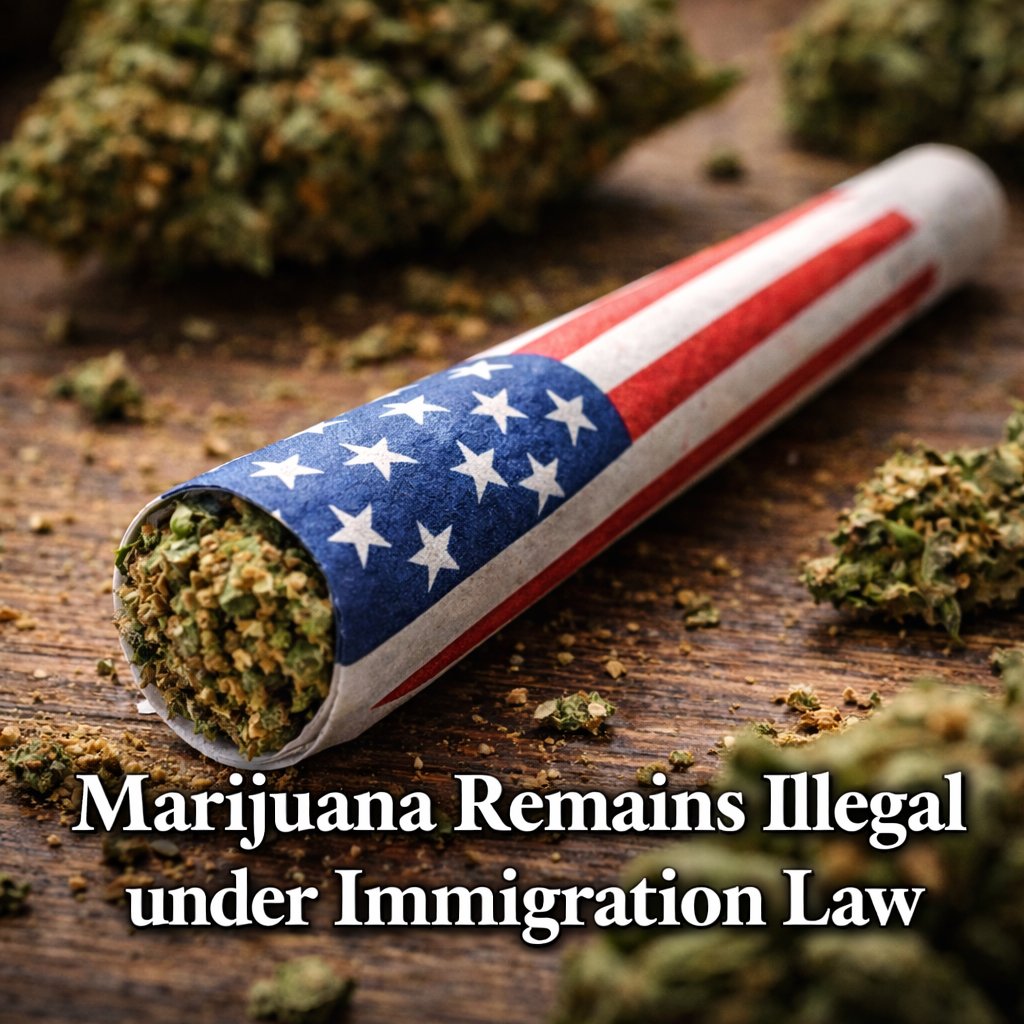
Trump’s recent proclamation aimed at expanding medical marijuana and cannabidiol research has generated widespread confusion, particularly among immigrants and noncitizens. Headlines and social media posts have led many to believe that marijuana is now “legal under federal law” or that past marijuana use no longer matters for immigration purposes. That assumption is wrong, and relying on it can cause serious and sometimes irreversible immigration consequences.
The proclamation focuses on facilitating scientific research and accelerating the administrative process to reconsider marijuana’s classification under the Controlled Substances Act. Even if marijuana is ultimately rescheduled from Schedule I to Schedule III, it would remain a federally controlled substance. Rescheduling is not the same as legalization, and it is certainly not the same as descheduling. For immigration law purposes, that distinction is critical.
U.S. immigration law is governed almost entirely by federal statutes, not state law and not executive messaging. Under the Immigration and Nationality Act, controlled substance violations carry some of the harshest penalties in the system. Marijuana remains listed as a controlled substance under federal law, and until it is completely removed from the Controlled Substances Act, marijuana-related conduct continues to trigger immigration consequences.
This means that marijuana use can still make a noncitizen inadmissible under INA § 212(a)(2)(A)(i)(II), deportable under INA § 237(a)(2)(B)(i), or ineligible for immigration benefits such as adjustment of status, naturalization, or certain waivers. Importantly, a conviction is not always required. In many cases, a simple admission of use, possession, or involvement with marijuana made to a consular officer, USCIS officer, or border agent can be enough to cause denial or removal proceedings.
State legalization provides no protection in immigration cases. A lawful purchase from a state-licensed dispensary, possession that is legal under state law, or even medical marijuana use recommended by a physician does not change the federal analysis. Immigration officers are instructed to apply federal law, and federal law continues to treat marijuana as a controlled substance. Courts have repeatedly upheld this framework, rejecting arguments that state legalization eliminates immigration consequences.
The proclamation also does not create any immigration waiver, exception, or safe harbor. It does not amend the Immigration and Nationality Act. It does not instruct USCIS, ICE, CBP, or the Department of State to disregard marijuana-related conduct. It does not prevent officers from questioning applicants about marijuana use or relying on admissions made during interviews. In short, it changes nothing about how immigration cases are adjudicated today.
This distinction is especially important at ports of entry, consular interviews, and naturalization interviews. Border officers routinely ask about marijuana use, even in states where marijuana is legal. Applicants often answer casually, believing honesty about a “legal” activity is harmless. In reality, those admissions can permanently bar entry or derail an otherwise strong case. The same risk exists during green card interviews and citizenship applications, where good moral character and admissibility are closely scrutinized.
There is also a dangerous misconception that federal tolerance of marijuana research signals leniency in immigration enforcement. Immigration law does not operate on policy vibes or political signaling. It operates on statutes written by Congress and interpreted strictly by agencies and courts. Until Congress changes the Immigration and Nationality Act or marijuana is fully removed from federal controlled substance schedules, marijuana remains legally toxic for immigration purposes.
For immigrants, visa holders, asylum applicants, green card applicants, and lawful permanent residents, the safest assumption remains the same as it has been for years: marijuana use can hurt your immigration case, regardless of state law or political announcements. Anyone with past marijuana use, a marijuana-related arrest, or even questions about how to answer immigration forms should seek legal advice before speaking with immigration authorities.
Trump’s proclamation may expand research and generate policy discussion, but it does not legalize marijuana for immigration purposes. Believing otherwise can cost people their visas, their green cards, and in some cases, their ability to remain in the United States. In immigration law, federal statutes matter more than headlines, and controlled substance rules remain unforgiving.
If you are a noncitizen and unsure how marijuana-related issues affect your case, the most important step is not to guess, assume, or rely on social media explanations. Immigration law punishes mistakes harshly, even innocent ones. Getting accurate legal guidance before making disclosures can make the difference between approval and permanent consequences.
The information provided in this article and website is intended for general information purposes only and is not to be relied upon as legal advice. For a free phone consultation with Attorney Thomas Lee, please call (213) 251-5533.