- Free Consultation: (213) 251-5533 Tap Here to Call Us




The K-1 Fiancé Visa Trap: Why Failing to Marry Your U.S. Sponsor Can Permanently Derail Your Green Card


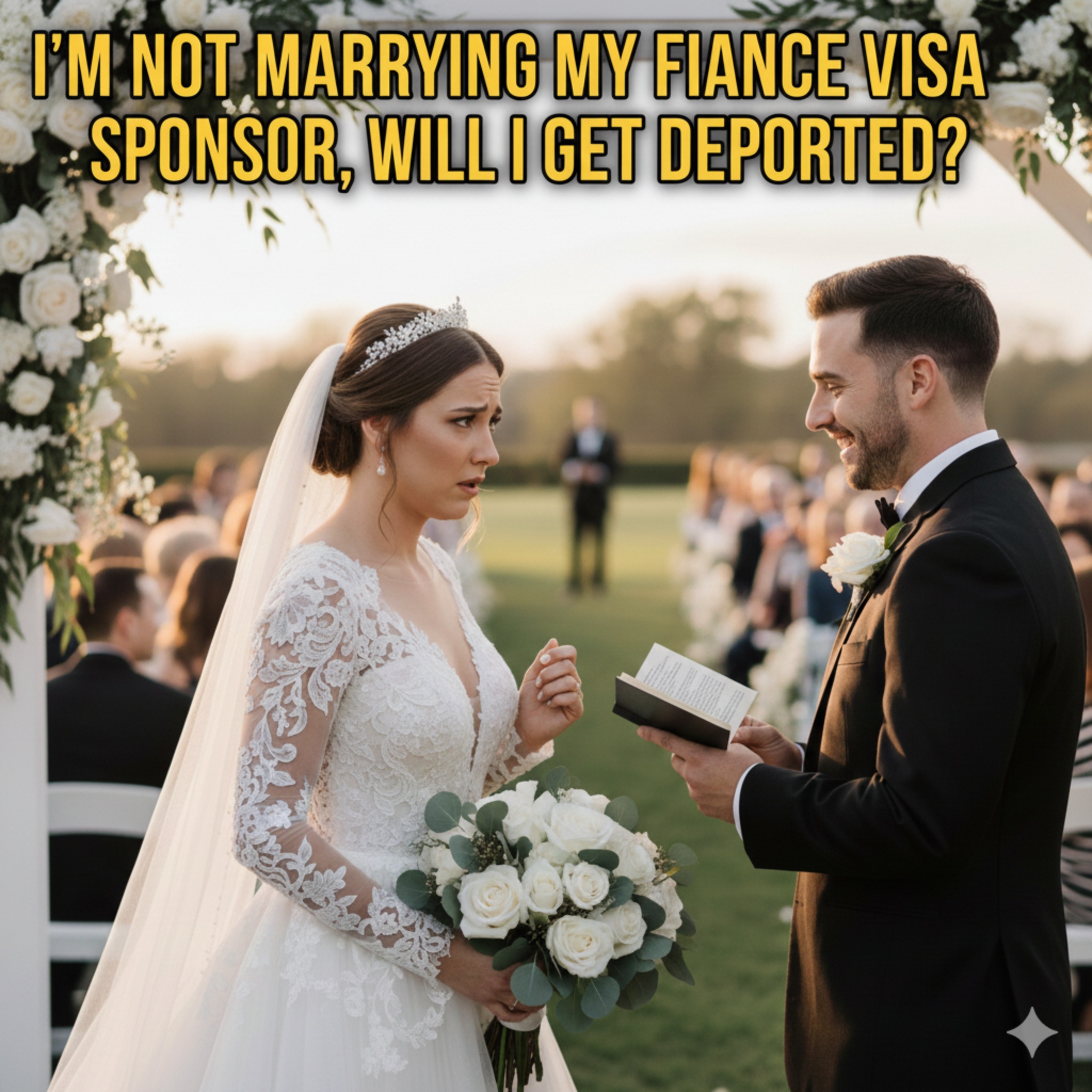
The K-1 fiancé visa is often portrayed as a fast and romantic gateway to permanent residence in the United States. A U.S. citizen files a petition, the foreign fiancé enters the country, the couple marries, and a green card follows. What is rarely emphasized is how unforgiving the law becomes if that marriage does not occur. For many K-1 entrants, failing to marry the petitioning fiancé within the required timeframe creates a permanent immigration barrier that cannot be cured later, even through marriage to a different U.S. citizen or sponsorship by a U.S. citizen child.
Congress designed the K-1 visa as a narrowly tailored, single-purpose visa. That intent is codified in Immigration and Nationality Act section 245(d), which provides that a K-1 nonimmigrant “may not adjust status except on the basis of the marriage of the nonimmigrant…to the citizen who filed the petition” (INA §245(d), 8 U.S.C. §1255(d)). The statute does not grant discretion to USCIS or immigration judges, and it does not contain exceptions for good-faith marriages, hardship, or equities developed after entry.
Once admitted on a K-1 visa, the foreign national has exactly 90 days to marry the petitioning U.S. citizen. That requirement is imposed by regulation at 8 C.F.R. §214.2(k)(5)(i), which states that failure to marry within 90 days results in termination of K-1 status. When the marriage does not occur, the individual immediately falls out of status and begins accruing unlawful presence for purposes of inadmissibility under INA §212(a)(9)(B), 8 U.S.C. §1182(a)(9)(B).
A common and dangerous assumption is that a later marriage to a different U.S. citizen can fix the problem. Federal courts have rejected that view. In Kalal v. Gonzales, the Ninth Circuit held that a K-1 entrant who failed to marry the original petitioner was statutorily barred from adjusting status through a subsequent U.S. citizen spouse, even where the later marriage was bona fide (Kalal v. Gonzales, 402 F.3d 948, 951–952 (9th Cir. 2005)). The court emphasized that INA §245(d) “unambiguously forecloses” adjustment through any other petitioner. Other circuits and USCIS policy have followed the same interpretation.
USCIS memorialized this position in its Policy Manual, which states that a K-1 nonimmigrant who does not marry the original U.S. citizen petitioner “cannot adjust status under any other basis,” including a later family-based petition (USCIS Policy Manual, Vol. 7, Pt. B, Ch. 7, available at https://www.uscis.gov/policy-manual). This bar applies regardless of how much time has passed or how compelling the personal circumstances may be.
Another widespread misconception involves U.S. citizen children. Many former K-1 visa holders believe that once their child turns 21 and files an immigrant petition, the K-1 problem disappears. It does not. While a U.S. citizen child may file an I-130 petition under INA §201(b)(2)(A)(i), the adjustment bar of INA §245(d) still applies. In most cases, the parent must consular process abroad, which triggers inadmissibility for unlawful presence if they accrued more than 180 days or one year after falling out of status (INA §212(a)(9)(B)(i)(I)–(II)).
Critically, waivers of unlawful presence under INA §212(a)(9)(B)(v) require a showing of extreme hardship to a qualifying relative, defined as a U.S. citizen or lawful permanent resident spouse or parent. A U.S. citizen child is not a qualifying relative for this waiver. As a result, many former K-1 entrants face mandatory three- or ten-year bars with no viable waiver option, even though their children are U.S. citizens.
The rigidity of these rules is not accidental. Congress treated the K-1 visa as uniquely susceptible to fraud and therefore imposed stricter adjustment limitations than those applicable to overstays who entered on other nonimmigrant visas. Immigration judges have repeatedly acknowledged that they lack equitable authority to override INA §245(d), even in compelling humanitarian cases. See, for example, Matter of Sesay, 25 I&N Dec. 431 (BIA 2011), which reaffirmed that adjustment eligibility for K-1 entrants is strictly limited to marriage to the original petitioner.
The practical consequences are severe. Former K-1 visa holders often remain in the United States for years believing a future marriage or family relationship will resolve their status. By the time they seek legal advice, they may already be subject to removal proceedings under INA §237(a)(1)(B) or permanently barred from adjustment of status inside the United States.
The uncomfortable reality is that the K-1 fiancé visa is not a flexible family-based visa. It is a conditional legal opportunity with a single permissible outcome. If that outcome does not occur within 90 days, the immigration consequences are long-lasting and, in many cases, irreversible.
Anyone who entered the United States on a K-1 visa and did not marry the petitioning fiancé should proceed with extreme caution before filing any immigration application. Filing the wrong application can expose unlawful presence, trigger removal proceedings, or foreclose limited waiver strategies. In K-1 cases, statutory bars matter more than intent, sympathy, or fairness.
The K-1 fiancé visa can still be a powerful immigration tool, but only when its rigid legal framework is fully understood and strictly followed. Relationships may change, but the statute does not. This post is intended for general informational purposes only and is not to be relied upon as legal advice. For a free legal consultation with Attorney Thomas Lee, please call (213) 251-5533.