- Free Consultation: (213) 251-5533 Tap Here to Call Us




California Strengthens Wage Theft Enforcement With SB 1316


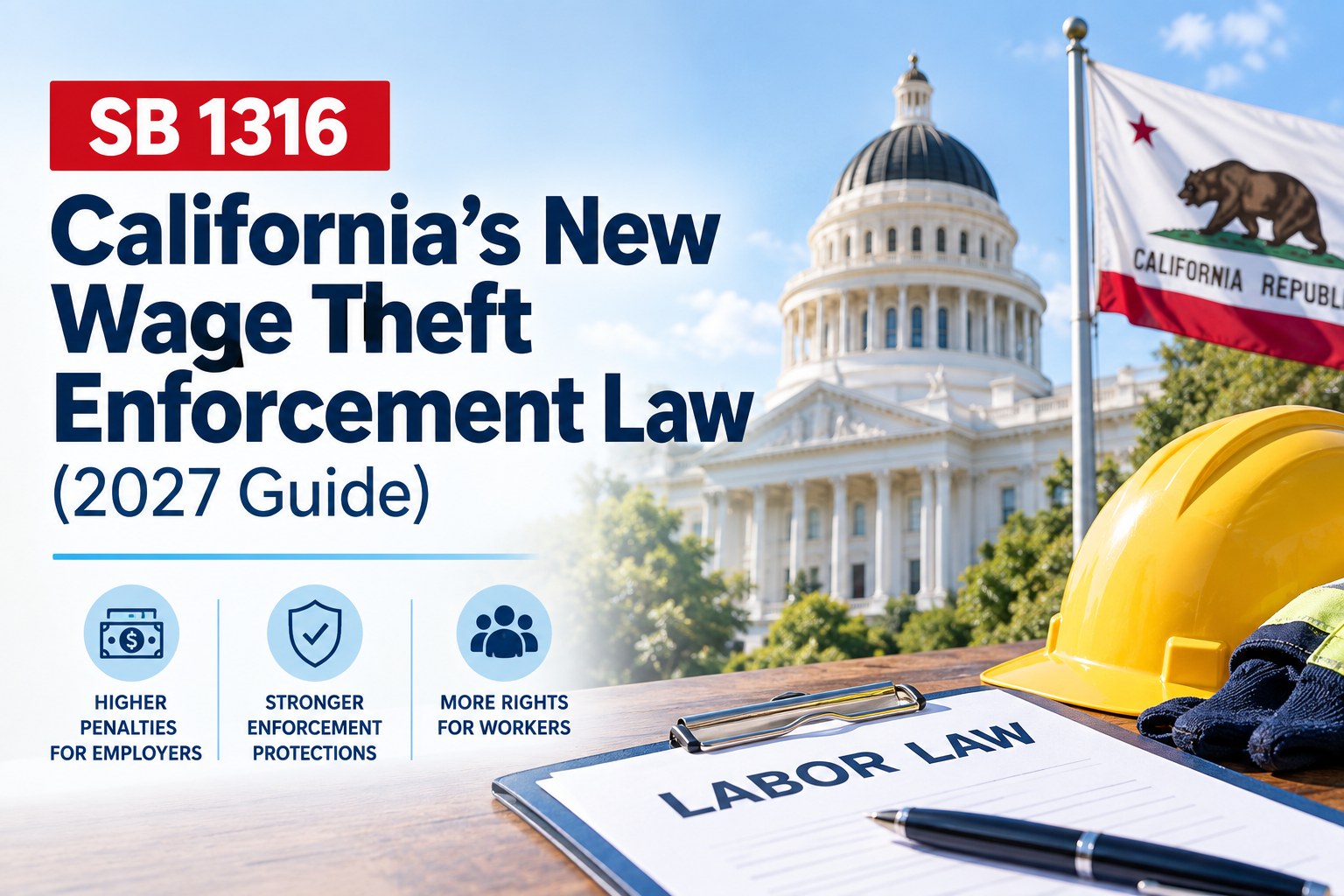
California employers are about to face a tougher landscape when it comes to wage claim investigations. On August 27, 2026, Governor Gavin Newsom signed Senate Bill 1316 into law, giving the state Labor Commissioner’s Office sharper tools to enforce wage claims and collect unpaid wages from employers who fail to pay what they owe. The law takes effect January 1, 2027, giving businesses the remainder of 2026 to get their internal practices in order.
At its core, SB 1316 responds to a familiar problem in wage enforcement: employers who slow-walk or stonewall Labor Commissioner investigations by refusing to hand over payroll records, time sheets, and other documentation the agency needs to evaluate a claim. Under the new law, an employer who fails to produce records when the Labor Commissioner requests them during an investigation can be barred from later introducing those same records as evidence in an administrative hearing, including retaliation proceedings. In practical terms, this closes off a strategy some employers have used to their advantage, withholding documents during the investigative phase and then producing favorable records only once a hearing is underway, catching workers and investigators off guard. Going forward, employers will need to respond fully and promptly the first time the Labor Commissioner comes calling, because a late or incomplete response could mean losing the ability to rely on that evidence at all.
The law also addresses what happens after the Labor Commissioner secures a judgment against a non-compliant employer. SB 1316 allows certain wage liens, the legal claims the state can place against an employer’s property to secure payment of unpaid wages, to be renewed. This matters because liens do not last forever, and employers with the means to wait out a lien’s expiration have sometimes been able to avoid paying what they owe simply by running out the clock. By allowing renewal, the law extends the state’s leverage and makes it harder for judgment debtors to escape liability through delay alone.
Taken together, these changes reflect a broader legislative trend in California toward tightening enforcement mechanisms rather than creating new substantive wage obligations. SB 1316 does not change what employers must pay workers or how quickly they must pay it. Instead, it changes what happens when employers fail to cooperate with the agency tasked with enforcing those existing obligations, and it strengthens the state’s ability to actually collect once a violation has been established.
For employers, the practical takeaway is straightforward. Recordkeeping and responsiveness now carry real legal consequences beyond simple compliance. Businesses should use the months before the law takes effect to review how they maintain payroll and personnel records, confirm that the right categories of documents are being retained, and establish clear internal procedures for responding quickly and completely to Labor Commissioner requests. Human resources staff and managers should be trained to recognize and escalate any communication from the Labor Commissioner immediately, since a missed or delayed response could have consequences that extend well beyond the original investigation.
For workers, SB 1316 is meant to translate into faster, more reliable outcomes when they file wage claims. By removing an incentive for employers to delay and by making enforcement judgments more durable through lien renewal, the law aims to ensure that a favorable ruling from the Labor Commissioner actually results in wages being paid, not just a judgment that quietly expires while the worker waits.
Legal Disclaimer
The information provided in this article is for educational and informational purposes only and does not constitute formal legal advice. Reading this material does not create an attorney-client relationship. Every case involves unique facts, and individuals seeking guidance on their case should consult an experienced attorney for legal advice. For a free phone consultation with Attorney Thomas Lee, please call (213) 251-5533.