- Free Consultation: (213) 251-5533 Tap Here to Call Us




How Victims of Certain Crimes can Get their Green Cards Through the U Visa


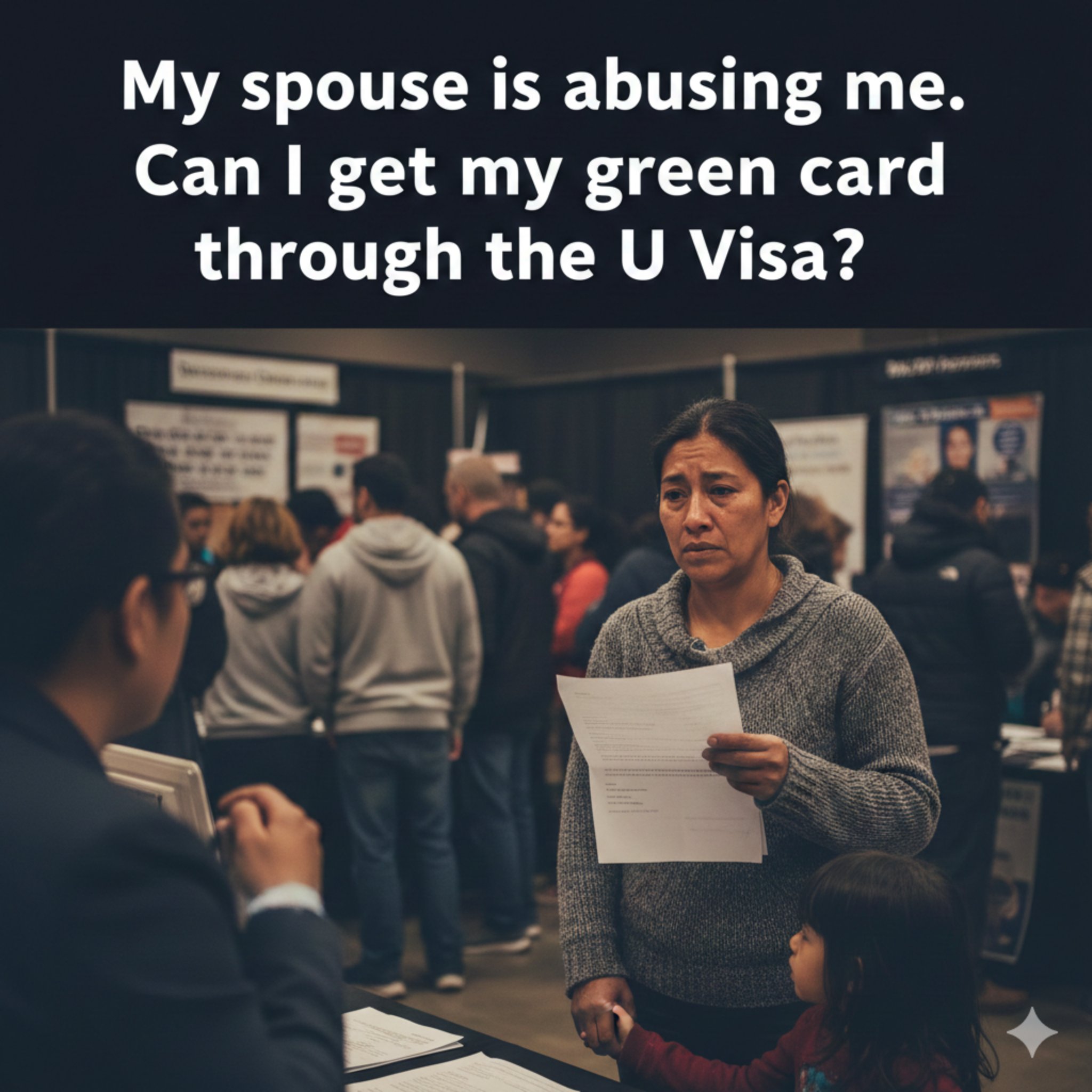
The U visa is one of the most powerful yet misunderstood forms of immigration relief available to undocumented immigrants and noncitizens who have been victims of crime in the United States. Created by Congress to encourage crime victims to come forward without fear of deportation, the U visa provides lawful immigration status, work authorization, and ultimately a pathway to a green card for eligible victims who cooperate with law enforcement. Despite its humanitarian purpose, many victims wrongly assume that contacting police or seeking help will expose them to immigration enforcement. In reality, the U visa exists precisely to counter that fear.
The U visa is authorized under section 101(a)(15)(U) of the Immigration and Nationality Act, which provides temporary nonimmigrant status to victims of qualifying crimes who have suffered substantial physical or mental abuse and who have been helpful, are being helpful, or are likely to be helpful to law enforcement authorities. Approved U visa holders receive lawful status for up to four years, employment authorization, and protection from removal. After maintaining U status for three years, they may apply for lawful permanent residence under INA section 245(m), available at https://uscode.house.gov/view.xhtml?req=granuleid:USC-prelim-title8-section1255.
To qualify for a U visa, the applicant must show that they were the victim of a qualifying criminal activity, that the crime caused substantial physical or psychological harm, that they possess information about the crime, and that they cooperated with law enforcement or are likely to cooperate if requested. Importantly, the law does not require an arrest, prosecution, or conviction. Many legitimate U visa cases involve crimes where the perpetrator was never charged or where the case was closed without prosecution. This distinction is critical, because victims are often discouraged from applying after being told that their case “went nowhere.” The governing regulation, 8 C.F.R. § 214.14, makes clear that helpfulness is the standard, not the outcome.
What Crimes Qualify for the U Visa?
Federal law contains a specific list of qualifying crimes, but this list is broader in practice than many people realize. Crimes such as domestic violence, sexual assault, rape, stalking, felonious assault, human trafficking, kidnapping, false imprisonment, extortion, blackmail, witness tampering, obstruction of justice, perjury, involuntary servitude, torture, and sexual exploitation all qualify. In cases involving homicide or manslaughter, certain surviving family members may also qualify. The statutory list is found in INA section 101(a)(15)(U)(iii). What matters is not the exact label of the offense under state law, but whether the conduct is substantially similar to a listed crime. USCIS has discretion to evaluate the nature of the offense, which means that careful legal framing of police reports and charging documents is often decisive in close cases.
Victims Must Report the Crimes to the Police
Every U visa petition requires a law enforcement certification confirming the victim’s helpfulness. This certification is submitted on Form I-918 Supplement B and may be completed by a wide range of agencies, including police departments, prosecutors, judges, child protective services, and certain labor enforcement agencies. There is no statutory deadline for when the certification must be signed, and many valid U visa cases involve certifications issued years after the crime occurred. The relevant regulation, 8 C.F.R. § 214.14(c)(2)(i), can be reviewed at https://www.ecfr.gov/current/title-8/section-214.14. While law enforcement agencies are not legally required to sign certifications, experienced advocacy often makes the difference between refusal and cooperation.
Broad Waivers are Available
One of the most important aspects of the U visa is its unusually broad waiver authority. Congress recognized that many crime victims would have serious immigration violations or even criminal histories that would normally bar them from relief. As a result, INA section 212(d)(14) gives USCIS discretion to waive almost any ground of inadmissibility for U visa applicants if it is in the public or national interest, including for humanitarian reasons or family unity.
Commonly waived issues include unlawful entry, visa overstays, prior removal orders, immigration fraud, misrepresentation, and certain criminal convictions.
Waivers are discretionary, and approval depends heavily on the quality of evidence submitted. Strong U visa cases often include detailed personal declarations, police reports, medical records, psychological evaluations documenting trauma, evidence of rehabilitation, and proof of family ties in the United States. Applicants should not assume that eligibility alone guarantees approval. USCIS weighs the totality of the circumstances, including public safety concerns, seriousness of prior conduct, and humanitarian equities.
U Visa Holders Can Apply for their Green Card after 3 Years
After three years in U status, applicants may apply for a green card under INA section 245(m), provided they have maintained continuous physical presence and have not unreasonably refused to cooperate with law enforcement. USCIS retains discretion at this stage as well. Approved applicants become lawful permanent residents, and qualifying family members may also adjust status.
The U visa is not a shortcut, and it is not automatic. Processing times are long, and mistakes in filing can delay or derail otherwise valid cases. But for victims of crime who fear deportation, it remains one of the strongest forms of humanitarian protection in U.S. immigration law. Immigration status should never be a barrier to safety, and Congress designed the U visa to ensure that victims are protected rather than punished for coming forward. For many, it is not only a form of relief, but a second chance at stability, lawful work, and permanent status in the United States. This article is written for general information purposes only and should not be relied upon as legal advice. For a free legal consultation with attorney Thomas M. Lee, please call (213) 251-5533.